Working Out the Personal and Political in Paint with Shiva Ahmadi

January 2024

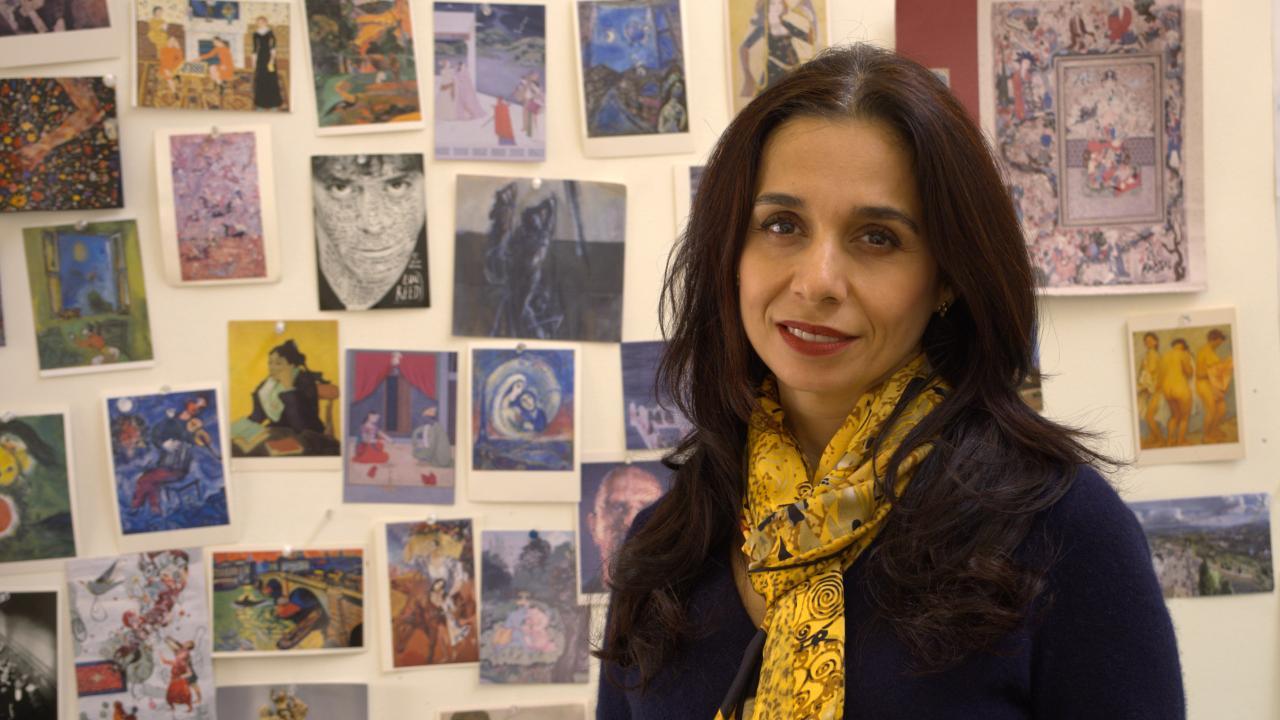
Shiva Ahmadi’s art encompasses and expresses her personal and political concerns, anxieties, fears and joys. But her art is not polemical nor pedantic, nor so personal that it cannot connect with others.  

“I am a political person,” said Ahmadi, a UC Davis College of Letters and Science professor in the Department of Art and Art History. “I don’t want to be, but as an Iranian, an immigrant and a woman, you have to keep up with politics. I don’t want to make beautiful art that’s for decoration. I haven’t had the opportunity in my life to be concerned with beauty of formal elements.” 
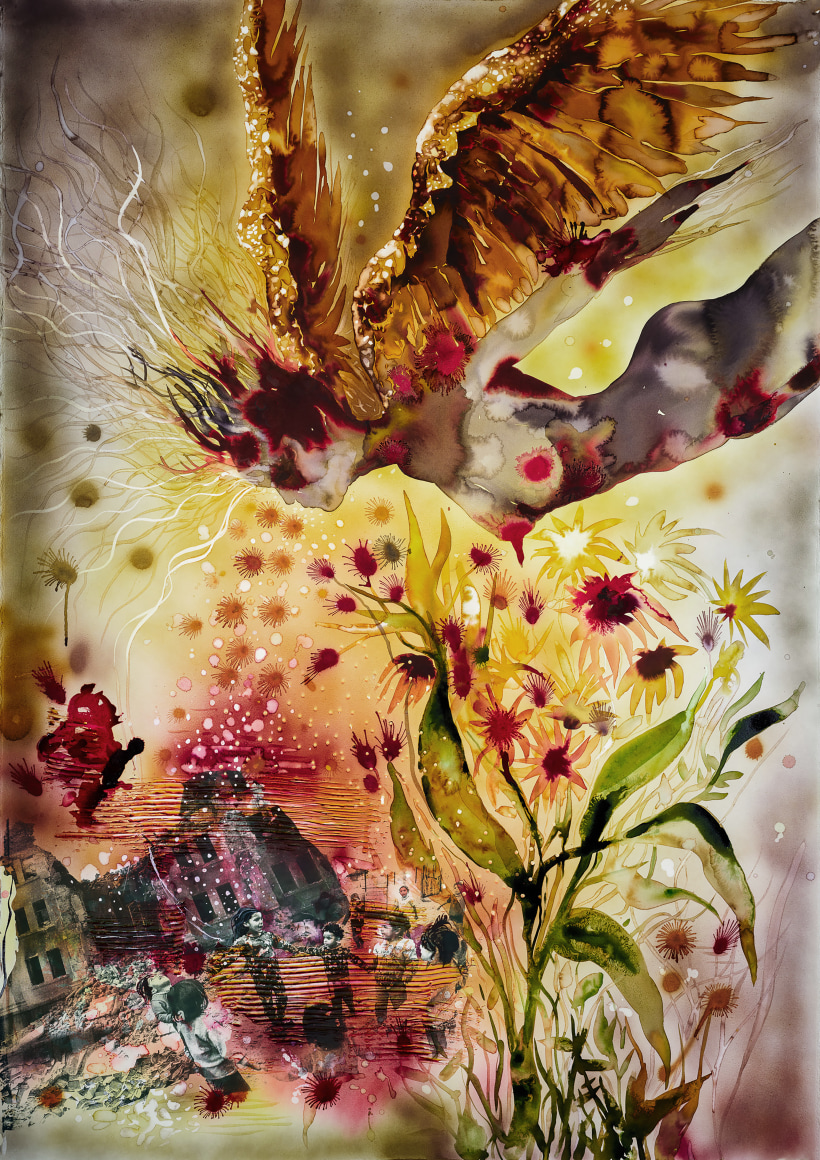
All of that can be seen in “Shiva Ahmadi: Strands of Resilience,” an exhibition of 19 paintings at the Jan Shrem and Maria Manetti Shrem Museum of Art at UC Davis Jan. 28 through May 6. 

While Ahmadi’s art is informed by conflicts in the Middle East, repression in her native Iran, and the divisive political and social milieu in the U.S., it is never specifically about those issues. Her paintings are metaphors, but what they are metaphors for is up to the viewer. And what they mean to Ahmadi emerges and changes throughout the creation process and even long after it. Sometimes they address events and issues that hadn’t even happened when she was making them, like the current war in Gaza. It’s as if history catches up with her art. 

“I’m still discovering things in them,” she said. “The story comes after.” 
Read full story

Music Diplomacy: Professor Traces Impact of State Department and Aaron Copland’s Latin American Outreach

This fall, the U.S. Department of State launched the Global Music Diplomacy Initiative to elevate music as a diplomatic tool to promote peace and exchange of ideas. In partnership with the music industry, the initiative includes a music mentorship program to bring artists from around the world to the U.S. for networking and training; a fellowship for scholars researching the intersection of arts and science; and using music as an English language learning tool around the globe.  

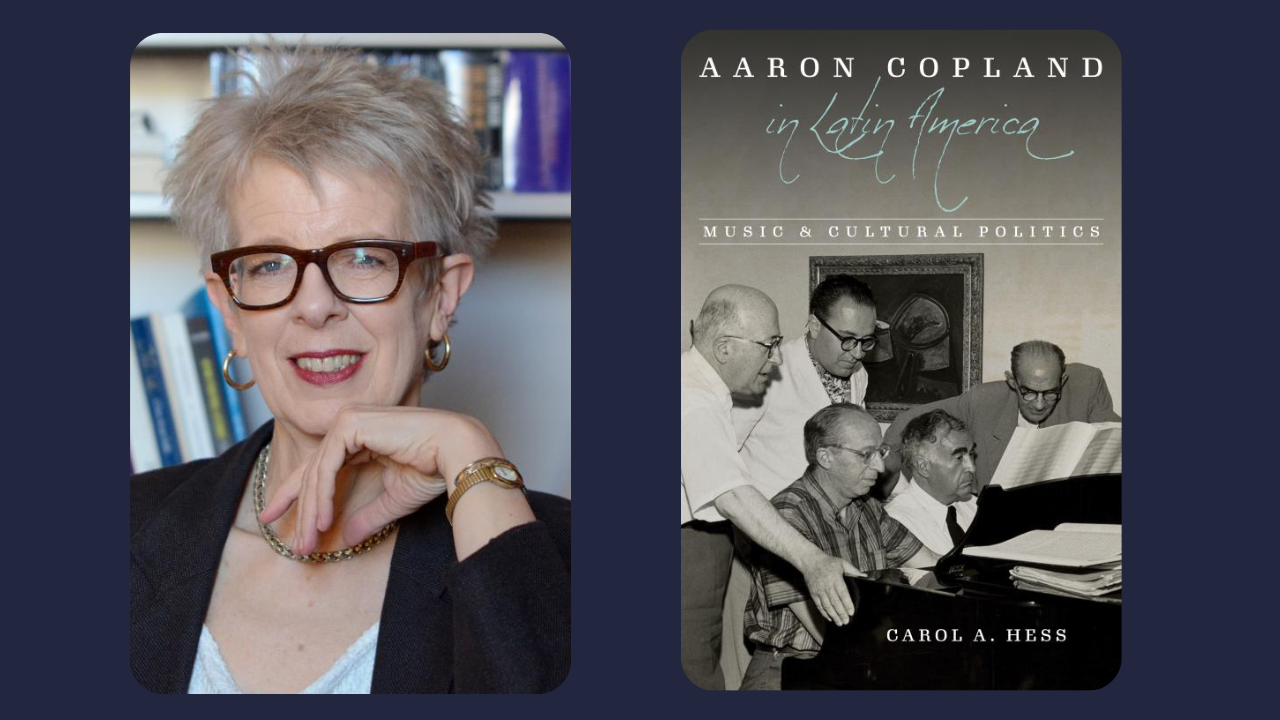
So, what’s the State Department doing in the music business? Actually, the State Department has a long music diplomacy history, and an expert on this is Carol A. Hess, a musicologist and Distinguished Professor of Music in the College of Letters and Science at UC Davis.  

Hess has written two books on the U.S. government’s cultural and mostly musical outreach — the most recent Aaron Copland in Latin America: Music and Cultural Politics, published in February, and the 2013 book Representing the Good Neighbor: Music, Difference, and the Pan American Dream. Hess herself has been the beneficiary of cultural diplomacy programs in the form of two Fulbright Fellowships to teach in Spain and Argentina; those fellowships sparked her interest in the State Department programs.  

When Hess — who in 1994 became the first person to earn a doctorate in musicology at UC Davis — entered the field, scholars were paying scant attention to Latin American classical music and almost none to music of the 19th and 20th centuries in the region, let alone cultural diplomacy in Latin America.  

“In the 1990s, several musicologists began working on the special challenges involved with music and cultural diplomacy,” said Hess, who returned to the UC Davis Department of Music as a professor in 2012. “Most of these scholars, however, worked on the East-West divide of the Cold War. I realized that the Spanish- and Portuguese-speaking world wasn’t getting much attention, so I decided to plunge into that.” 

Read the full story.

Malaquías Montoya’s Multi-Generational Impact

Two Extensive Exhibitions Honor Professor Emeritus and Activist Artist

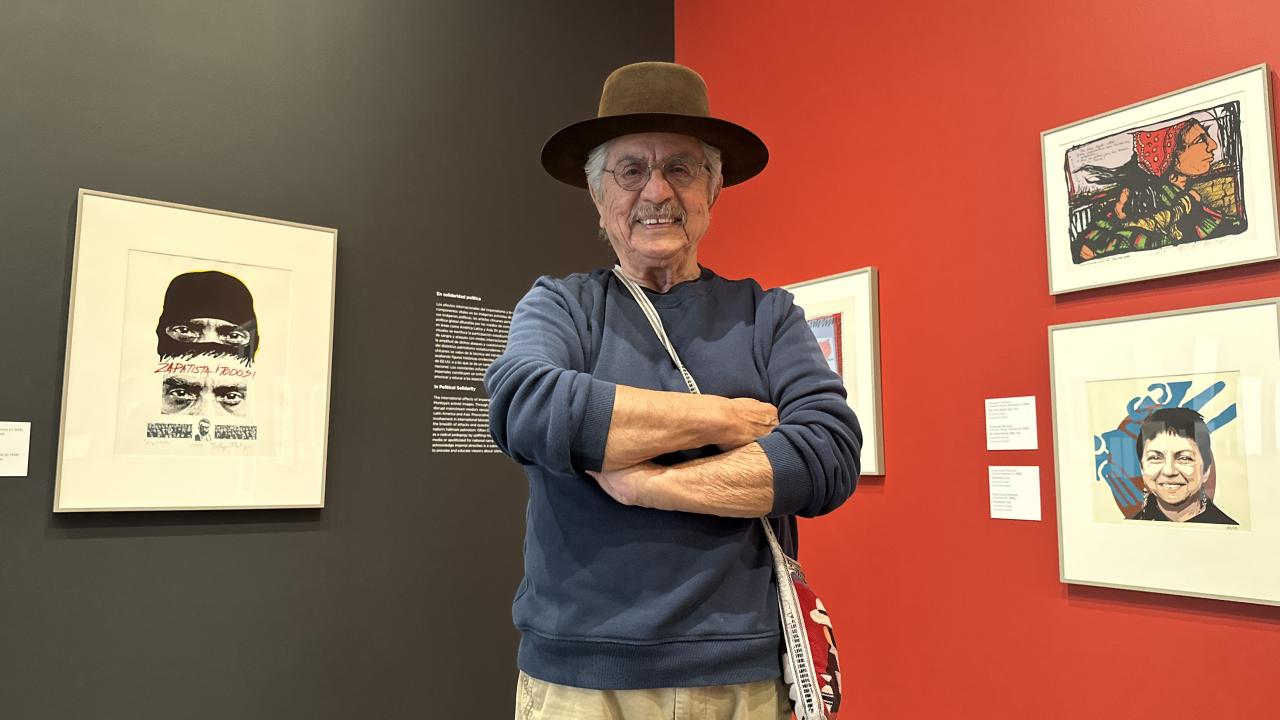
At recent exhibition openings, Malaquías Montoya was surrounded by former students and colleagues, and artists from all over. Many brought their families to meet the man who has meant so much to them. Although recovering from COVID, he arrived early and left late. 

Montoya, a professor emeritus of Chicana and Chicano studies at UC Davis, is being widely celebrated with two major exhibitions: “Malaquías Montoya and the Legacies of a Printed Resistance” at the Jan Shrem and Maria Manetti Shrem Museum of Art at UC Davis and “Por el Pueblo: The Legacy and Influence of Malaquías Montoya” at the Oakland Museum of California.  

Montoya is an artist. But he is much more. Montoya, 85, has influenced several generations of students who went on to make art or make a mark on the world in other ways.  

Read the full story.

Isao Fujimoto’s Scholarship, Activism and Caring Leaves Deep Impression

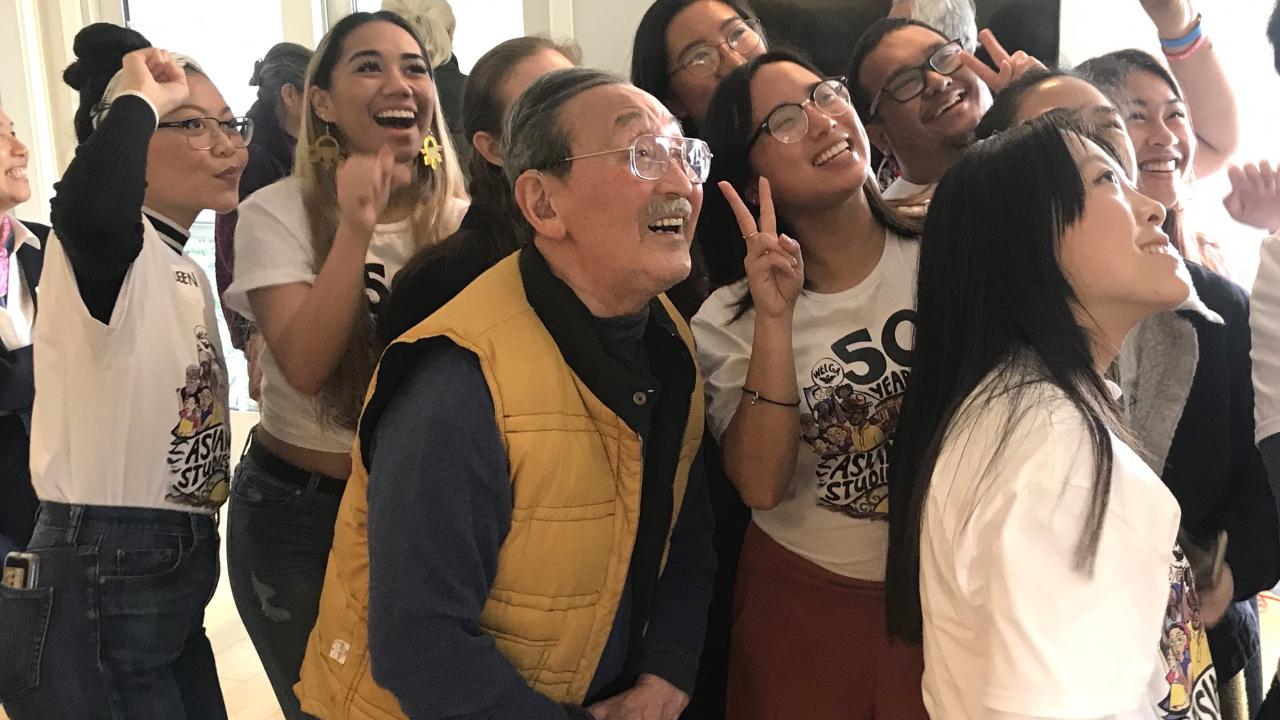
During his four decades as a lecturer at UC Davis and nearly 60 years as a community organizer, Isao Fujimoto has touched thousands of lives. Each one seems to remember him, and he remembers each one. Former students, colleagues and friends from near and far celebrated the life and work of Fujimoto, 86, a founder of the UC Davis Asian American studies program, at a recent symposium.

Isao Fujimoto takes a selfie with students at a recent event honoring him

“Isao Fujimoto stood up for social justice around the state and the world,” said Robyn Rodriguez, chair of the Department of Asian American Studies in the College of Letters and Science. Fujimoto’s work, Rodriguez said, is a model of “radical pedagogy — challenging the hierarchy between faculty and students and valuing intergenerational knowledge.”

The symposium was held at Davis’ International House, the community organization Fujimoto helped found and where he is the subject of the exhibit Isao Fujimoto: Life and Legacy, created by Scott Tsuchitani, a doctoral candidate in cultural studies. The Asian American studies program is celebrating its 50th anniversary, as are the African American and African, Chicana and Chicano, and Native American studies programs.

Family imprisoned during World War II

Fujimoto’s activism grew out of trying experiences while growing up as a person of Japanese descent in the United States. At the time, most Asians were not eligible for U.S. citizenship. His family lived and farmed on the Yakama Indian Reservation because Washington, and many other states, barred noncitizens from owning or leasing land. Reservations were considered federal land not subject to such laws.

The day after the December 1941 bombing of Pearl Harbor, Fujimoto’s father was arrested. The next year, the family’s mother and four children were imprisoned at Heart Mountain, Wyoming, and later at Tule Lake, California, internment camps. After World War II, they settled near Morgan Hill, California, and farmed. Fujimoto went on to earn degrees from UC Berkeley, Stanford University and Cornell University.

In 1967 Fujimoto joined the newly created applied behavior sciences department at UC Davis, was a founding faculty member in the community development program, and in 1969 helped launch the Asian American studies program.

“All of these had, I think, for me, certain common themes,” Fujimoto said in an interview. “I think the crux is community. What does community mean in our lives? Not only what does it mean, but what’s my role in it? No matter where you are, you can make a contribution.”

Continue reading

30 Years of Student Writing Celebrated

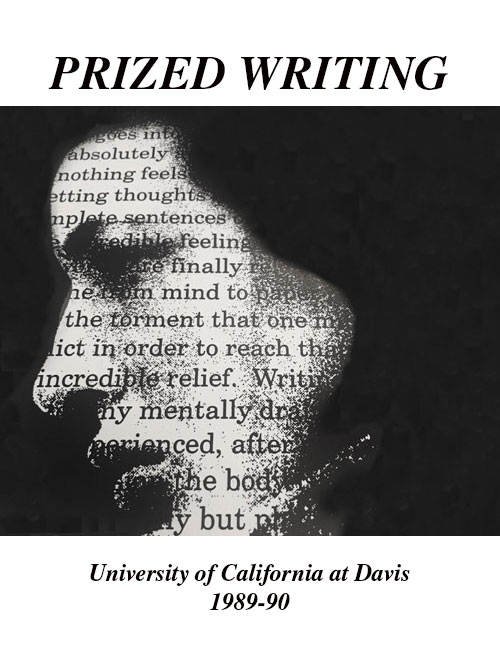
PWcoverimage (1)Liz Garone’s personal story about olive oil — how her grandparents brought along gallons when they immigrated from Italy and how it is her favorite moisturizer — published in the first issue of Prized Writing helped launch Garone’s writing career.
Garone (B.A., American studies and English, ’90) will speak at the 30th anniversary celebration of Prized Writing on Oct. 16. Prized Writing, published annually by the University Writing Program (UWP) in the UC Davis College of Letters and Science, showcases writing by undergraduate students across campus have done for classes.

“Being in Prized Writing definitely had an impact on my decision to become a writer,” said Garone, a journalist based in Alameda.

Continue reading

A New Look at the Slant Step

Odd object that inspired generations of artists back in spotlight

Slant_Step (1)

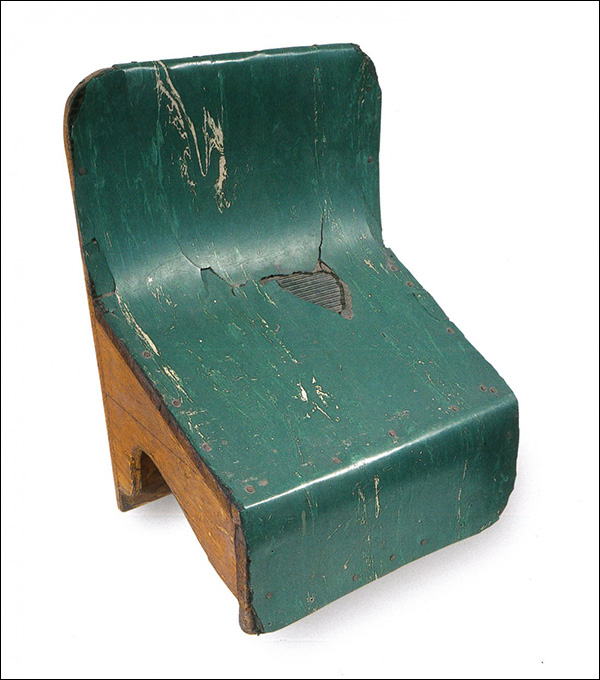
Published in 1969, the Slant Step Book celebrated a thrift store find that became, and remains, a part of UC Davis art department lore. The Slant Step is a green linoleum-covered plywood stool with a slanted — and seemingly nonfunctional — step that has inspired artists for decades.

The long out-of-print book is filled with black and white images, poetry, letterhead from the fictitious Slant Step Mfg. Co., a recipe for making a slant step, and lyrics to “The Slant Chant.” For the 50th anniversary of the book, Verge Center for the Arts in Sacramento has republished it, along with a companion volume, Slant Step Book: The Mysterious Object and the Artworks It Inspired, and has also organized the exhibition Slant Step Forward, running Sept. 12 through Oct. 27 (2019).

Continue reading

Art Historian Tracks ‘Missing Pages’ from 13th-Century Armenia to the Getty

missingp[

UC Davis art history professor Heghnar Zeitlian Watenpaugh’s The Missing Pages: The Modern Life of a Medieval Manuscript from Genocide to Justice starts, figuratively and literally, on June 1, 2010, in Los Angeles Superior Court. That day, the J. Paul Getty Museum was sued for the return of eight illustrated pages from a 13th-century Armenian book of gospels. The Missing Pages, published by Stanford University Press, took Watenpaugh to the places the pages had traveled, from their creation in 1256 in present-day Turkey, to Armenia, Syria, Ellis Island, Massachusetts and Los Angeles. The illustrated pages disappeared during the Armenian genocide of the early 20th century and were purchased by the museum in 1994. Continue reading

UC Davis Composition Students’ Music Heard Far and Wide

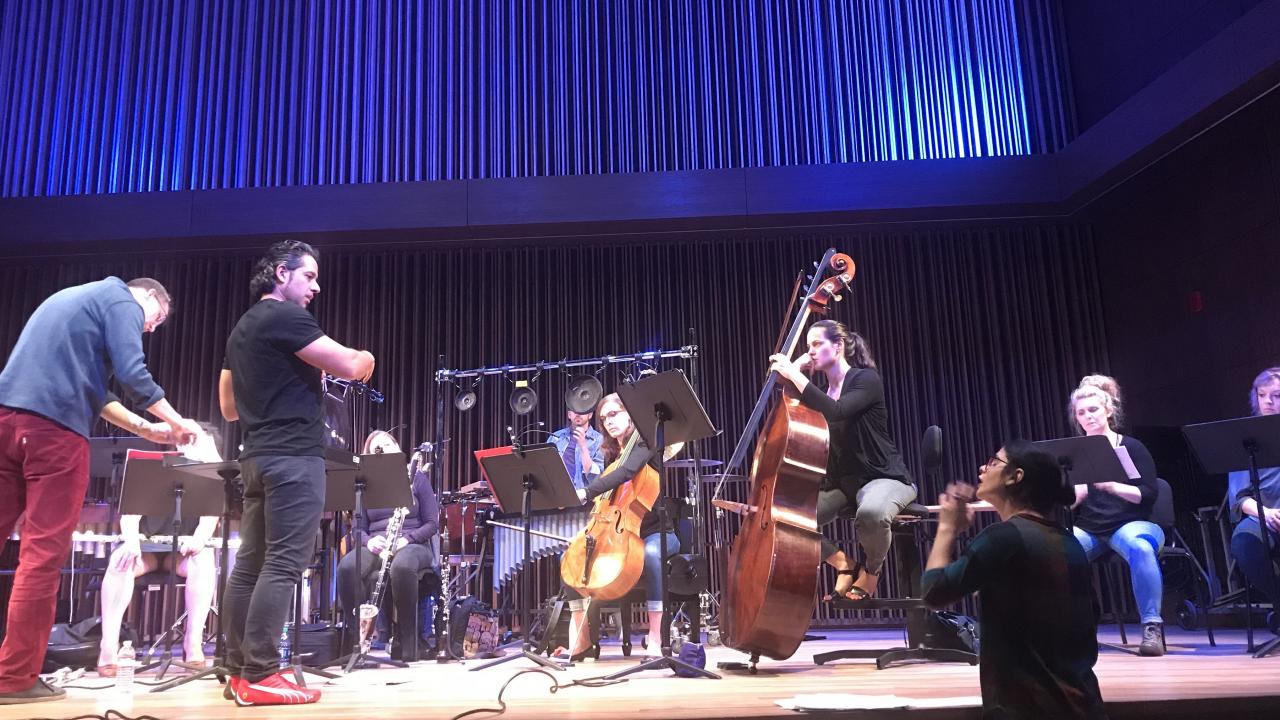
img_8310_0When doctoral music composition students at UC Davis hear their music played for the first time, they hear it played by professionals who are champions of new music with years of performance experience.

“It’s an absolute luxury to have these professional musicians play our work,” said student Jonathan Favero. “In many programs you have to beg, borrow and steal to find players.”

During the 2018 calendar year alone, student pieces have been premiered on campus by the Empyrean Ensemble, violinist Miranda Cuckson, electric guitar/percussion duo The Living Earth Show, Ensemble Dal Niente, the Lydian String Quartet, the Brooklyn Art Song Ensemble and the St. Louis Symphony Orchestra. Watch Video Continue reading